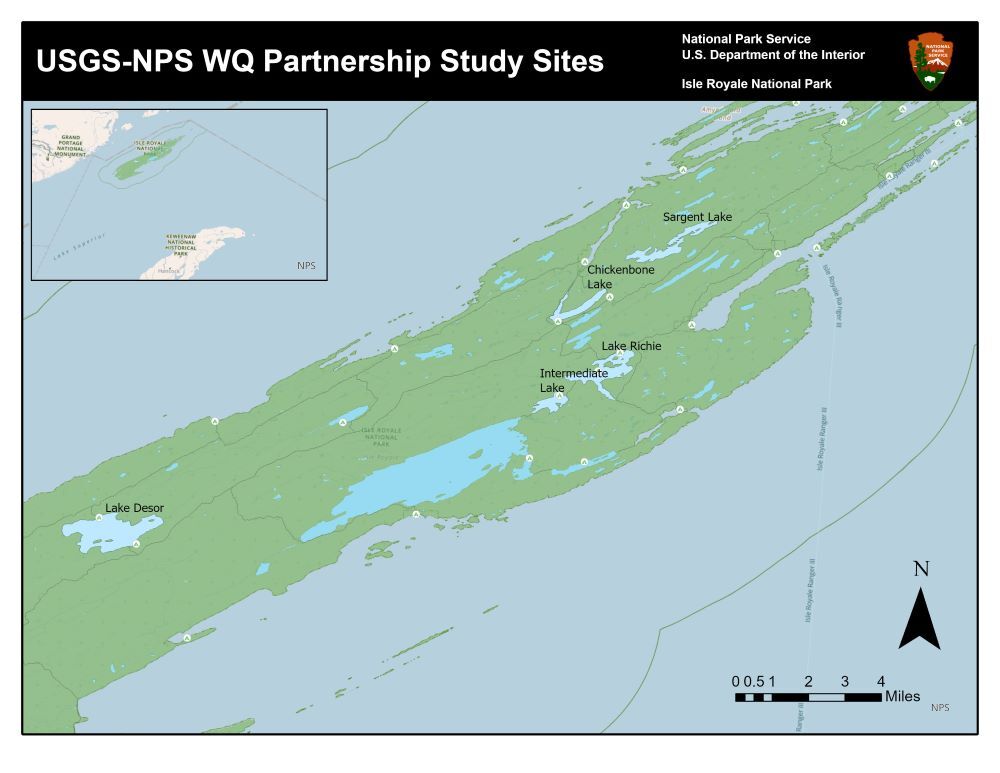
USGS Investigators: Anna Baker
NPS Investigators: Lynette Potvin
| 2026 | 2027 |
|---|---|
| $75,000 | $75,000 |
NPS Park: Isle Royale NP
USGS Center: Upper Midwest Water Science Center
States: Michigan
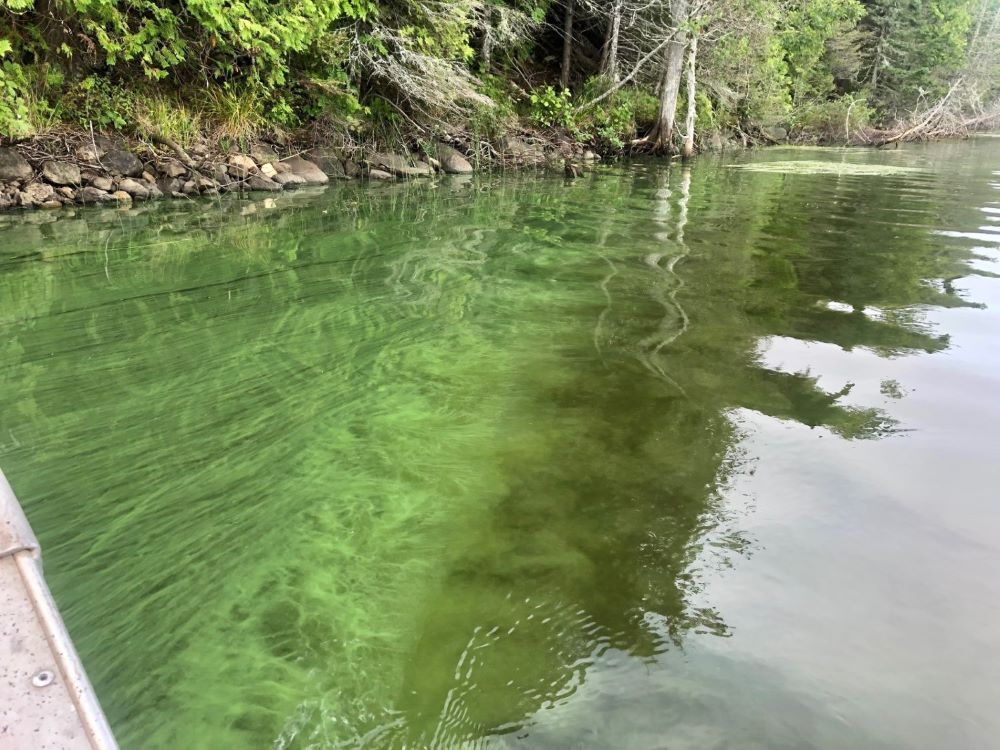
Isle Royale National Park (ISRO), a remote island wilderness nestled in the pristine waters of Lake Superior, has been experiencing increased occurrences of harmful algal blooms (HABs) in its inland lakes. These inland lakes are not only home to the abundant wildlife of ISRO but also provide drinking water visitors hiking and camping in the backcountry and are significant to the Grand Portage Band of Lake Superior Chippewa. These HABs have been documented to produce cyanotoxins, which can pose a risk to human and wildlife health when consumed.
Through this study National Park Service and U.S. Geological survey seek to improve our understanding of the drivers of inland HABs at Isle Royale and of what stimulates cyanotoxin production by these inland HABs. In particular, we will explore the potential role of human waste from campsite latrines in delivering nutrients to lakes by simultaneously measuring water quality, HABs, and E. coli Human Bacteroides gene marker, which can differentiate human waste from other animal waste. The results of this study will assist Park managers in understanding if park infrastructure is in need of repair or replacement and will help communicate risks to the public.