
USGS Investigators: Samuel Lopez
NPS Investigators: Rebecca Weissinger
| 2026 |
|---|
| $50,000 |
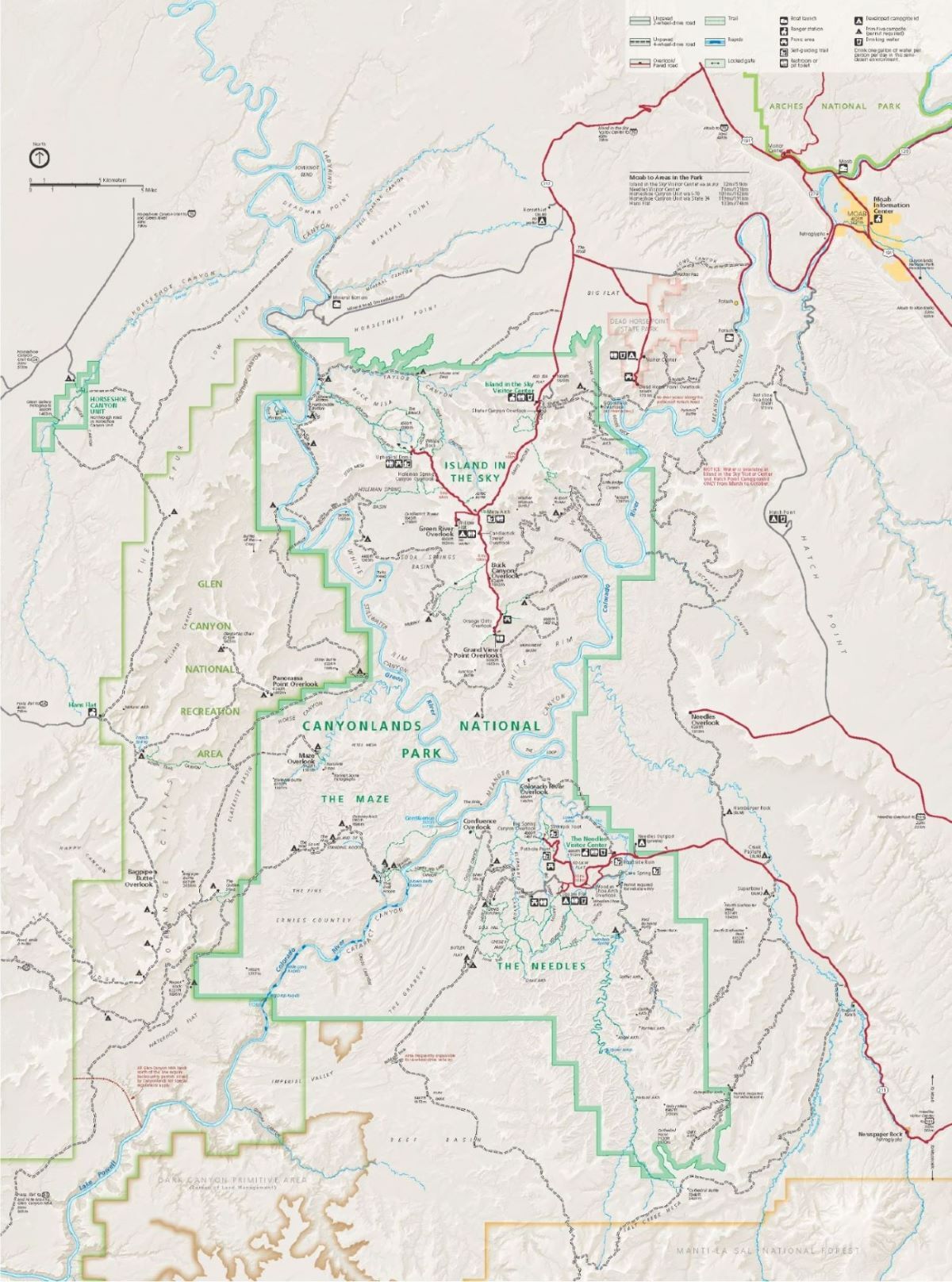
Selenium (Se) concentrations in the Colorado River have been of concern for several decades. The Colorado River in Utah from the Colorado state border to the confluence with the Green River within Canyonlands National Park was listed as impaired for Se in 2006 under the Clean Water Act, posing potential harm to long-lived native endangered fish species. This listing was based in part on Se in water samples collected by the National Park Service (NPS) that exceeded the dissolved Se state water-quality standard of 4.6 µg/L.
The states of Utah and Colorado have existing plans (Total Maximum Daily Loads, or TMDLs) to reduce dissolved Se in the Colorado River, with water quality monitoring being an important indicator of progress. In WY2013, all monitoring sites on the Colorado River within Canyonlands National Park began to report dissolved Se concentrations primarily below detection. The timing of this shift corresponds to a change in analytical methods at the Utah Public Health Laboratory (UPHL). In contrast, an upstream location at the Colorado-Utah state line, sampled by the U.S. Geological Survey and processed at the USGS National Water Quality Laboratory (NWQL) has remained relatively consistent over time, with some recent samples still occasionally exceeding the 4.6 µg/L state water quality standard.
This project involves conducting an interlaboratory comparison on split Colorado River water samples to determine if elevated Se concentrations are present in the Colorado River through the reach that includes Canyonlands National Park. The data can be used to compare the hydride generation atomic absorption spectrometry method used by UPHL and the inductively coupled plasma mass spectrometry method used by NWQL. Monitoring of Se is important to Canyonlands National Park as Se concentration is included in endangered fish recovery plans for the Colorado River Basin, and a better understanding of current Se concentrations in the Colorado River will provide valuable feedback on the efficacy of state TMDLs and compliance with the Clean Water Act. Understanding Colorado River Se concentrations is vital to assessing the efficacy of Se reduction efforts.