Rock Units |
|---|
|
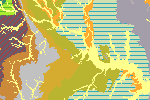
Comments: Rock units can include both groups and individual formations. Data Source: Geologic Database of Texas
Click a rock unit on the map to view more information.
|
Members |
|---|
|
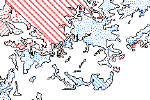
Comments: Groups and individual formations can be further subdivided into smaller units called members. Data Source: Geologic Database of Texas
Click a member on the map to view more information.
|
Faults |
|
|---|---|
![]() |
Anticline |
![]() |
Concealed Normal |
![]() |
Inferred Normal |
![]() |
Normal |
![]() |
Overturned Anticline |
![]() |
Overturned Syncline |
![]() |
Syncline |
![]() |
Thrust |
![]() |
Transverse (From-To) |
![]() |
Transverse (To-From) |
![]() |
Unspecified |
|
Comments: Faults are depicted as arrows showing relative movement. Data Source: Geologic Database of Texas
Click a fault on the map to view more information.
|
|
Map Sheets |
|
|---|---|
| Source map sheet | |
|
Comments: The Geologic Database of Texas was digitized from the Geologic Atlas of Texas (GAT) . This map layer shows the boundaries of these source map sheets. Sheet names are labeled on the map. Data Source: Geologic Database of Texas
Click a sheet on the map to view more information.
|
|
Geolocation |
|
|---|---|
|
|
Your approximate location |
|
Comments: The geologic features presented are 1:250,000-scale and may have a different level of locational accuracy than your marked location.
Click the marker to zoom to your location.
|
|
Base Map: Imagery |
|---|
Comments: This base map provides 0.3-meter-resolution satellite and aerial imagery in the continental United States. Data Source: ESRI ArcGIS Online |
Base Map: Topographic |
|---|
Comments: This base map includes administrative boundaries, cities, water features, physiographic features, parks, landmarks, highways, roads, railways, and airports. Data Source: ESRI ArcGIS Online |